Home / Blog / Working with Chinese Factories
Are Foshan Furniture Buyers Worth It? Fees, Quality & Risks
A filmed Foshan showroom tour shows what furniture buyers do, how supplier commissions can shape a route, and what to verify before placing an order.
- A good buyer narrows suppliers, explains product differences and records the exact order.
- Ask who pays the buyer and whether supplier commissions affect the route or price.
- Compare delivered quotes for the same specification, then attach the approved sample to the order.
A Foshan furniture buyer can be worth paying when they save you time, compare actual workmanship and make the order easier to verify. The value depends on disclosed fees and commissions, a defensible shortlist and a written specification. The filmed tour provides concrete examples, but its income and production-cost estimates are not independently verified.
The phrase furniture buyer sounds straightforward: someone helps you find furniture. In Foshan, it can describe a much wider service. A buyer may collect your requirements, pick showrooms, arrange a car, introduce products, negotiate, and coordinate an order. The video follows one experienced buyer for a day while its host plays the customer. It is useful precisely because it shows both sides of the proposition: a capable guide can save time and spot defects, while the same guide may be paid by the suppliers they recommend.
The film is a field interview, not an audit of the factories’ accounts. Its price and income figures are conversations and estimates. The practical question is therefore less “Are all buyers good or bad?” than “Can I see what this particular buyer does, who pays them, and exactly what I will receive?”
What the buyer actually does
The buyer in the film says he has worked in the trade for about six years and now runs his own studio. He meets the visitors at their hotel and drives them between showrooms. Before proposing any stops, he wants a budget and reference pictures. If the customer cannot name a firm budget, he asks where they have already shopped; those stores tell him something about their taste and expected quality level. He says a good day is not measured by the number of showrooms visited, but by whether the selections are relevant. Video 01:04–03:45
 The next showroom may be different from the first.
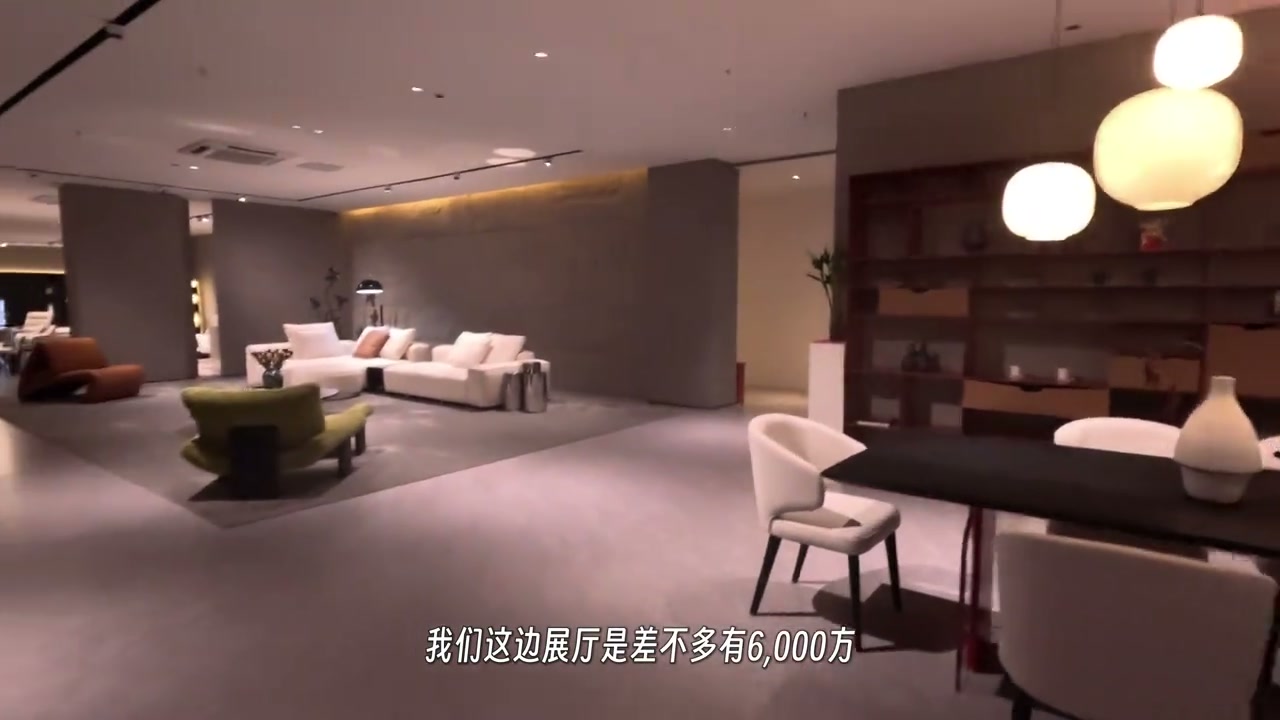
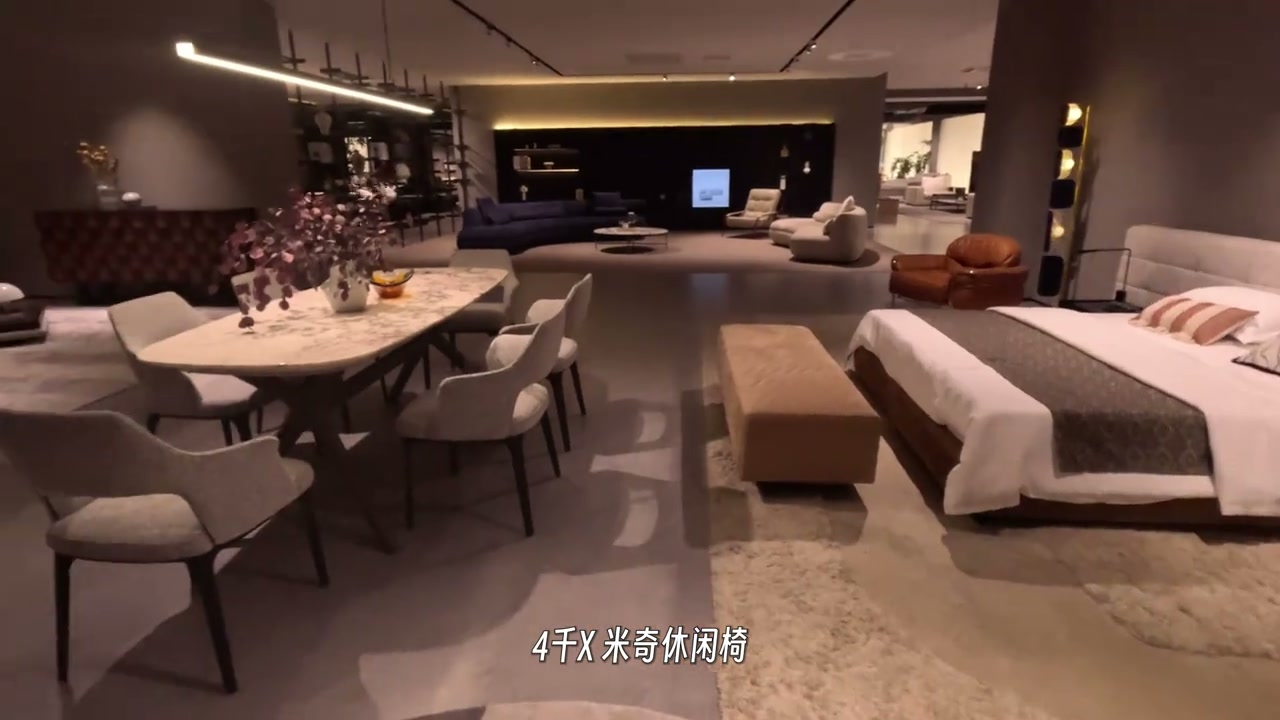 Dining, living and bedroom furniture on one showroom floor.
That is real work in a fragmented market. The host argues that buyers helped make Foshan’s furniture scene more accessible to distant customers and reduced the old information gap. The buyer can narrow an overwhelming selection and translate vague terms such as “good leather” into things a customer can inspect. But the route also gives the buyer power: if you only see their preferred suppliers, you cannot tell what has been omitted.
The value of a buyer is not the car ride. It is better judgment, a relevant shortlist and a defensible order.
The film contrasts two payment approaches. The interviewed buyer says he charges roughly RMB 300 if a visit ends without an order, and no separate customer fee if it does end in a sale. The host says other buyers may request a non-refundable upfront payment, with figures of a few hundred to a couple of thousand yuan discussed. These are examples heard in the video, not standard rates for all buyers. The host’s concern is reasonable: paying before seeing the products, route or price policy leaves the customer uncertain about what service they have bought. Video 02:03–03:30 For a site-specific example of how fees can be documented, see our fee disclosure process.
Follow the money all the way through
“Free to the customer” does not mean unpaid. The interviewed buyer says that, on a completed sale, he is paid by the supplier rather than adding an explicit fee to the customer’s bill. Later in the tour, the participants discuss supplier commissions in the 20–30% range. The host also gives a hypothetical sofa example: a roughly RMB 20,000 selling price, an estimated production cost of RMB 7,000–8,000, and a possible RMB 6,000 commission at 30%. The production cost is his estimate; the film does not show an invoice or verify an actual commission on that sofa. Video 05:15–06:30, 15:55–16:25
| Figure mentioned | What the film means | How to read it |
|---|---|---|
| RMB 300 | One buyer’s stated charge when a tour produces no order | A service model, not a market rule |
| 20–30% | Commission range discussed for some supplier relationships | Ask for the actual terms on your order |
| RMB 20,000 sofa | Host’s example for exploring price, estimated cost and commission | Illustration, not verified factory accounts |
| Factory price × 1.5; retail × 2 | Host’s rough comparison of buyer-led and conventional store pricing | Not a universal formula or a guaranteed saving |
The last two multipliers describe markups, not margins: a price of 1.5 times cost implies a one-third gross margin before overhead; twice cost implies a 50% gross margin. Neither number tells us net profit.
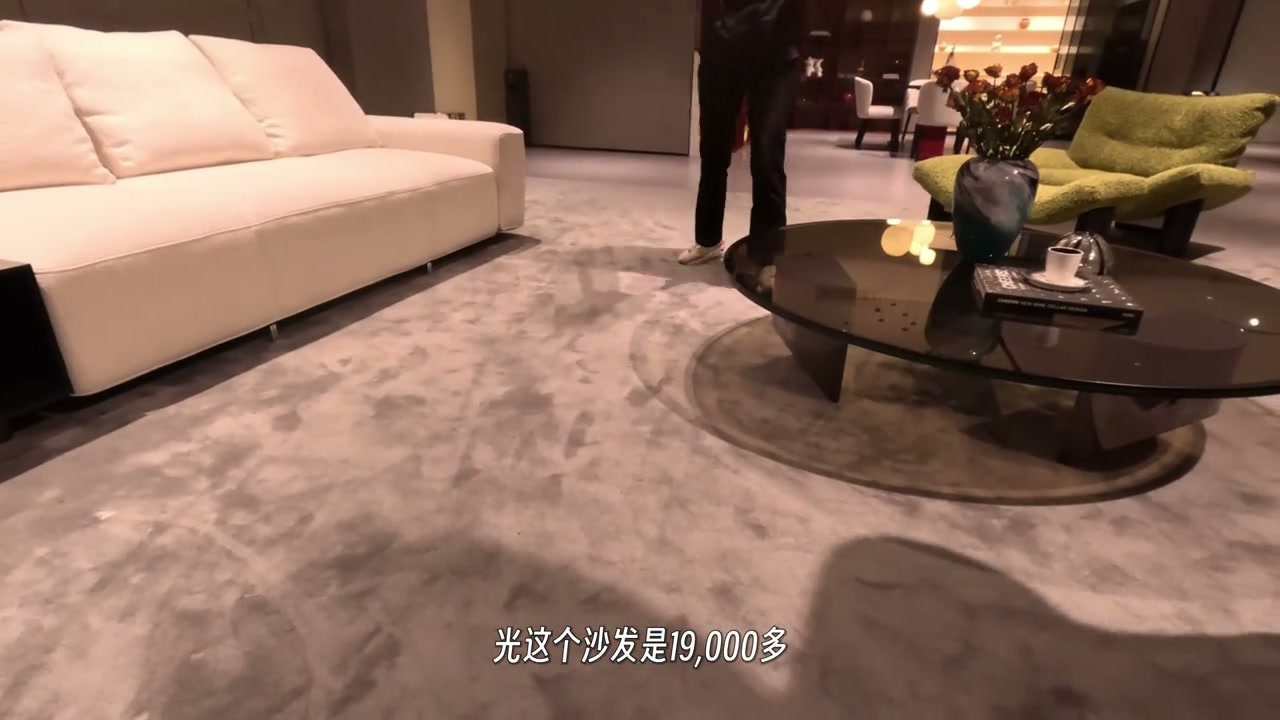 The sofa alone costs more than RMB 19,000.
The host’s strongest point is about disclosure. He questions the presentation of a small customer-side service fee as the buyer’s entire income when supplier payments may also exist. Supplier commissions are common in distribution; they become a conflict when the customer assumes recommendations are independent, or when a higher rebate steers the route toward a weaker product. The conversation also floats earnings of roughly RMB 200,000–300,000 a year for a successful individual buyer. Separately, it speculates about a very large operator with RMB 500 million in sales and a possible 10% surplus after fixed costs. No records support either estimate in the film; they are prompts to examine the business model, not reported income. Video 07:36–08:45, 17:38–17:50
The all-in price matters. During the tour, a quoted item appears not to include shipping, and the conversation mentions several thousand yuan for transport. A useful comparison adds freight, packing, taxes if relevant, installation, delivery risk and after-sales handling to the furniture price. Video 03:39–03:51 Our landed-cost checklist lists the additional cost lines to verify.
 Transport is not included.
Two showrooms, similar prices, different work
The film’s most convincing evidence comes from the furniture itself. The host first sees a leather sofa he considers expensive for its finish. He points to the thick, poorly resolved leather at an edge seam. In the second showroom he examines a similarly priced sofa and finds a neater edge and more consistent stitching. He calls attention to skiving: thinning leather where it folds around piping or joins another panel, so the seam lies flatter. He also asks about the frame, leather grade, stitch spacing and material on the base. The second supplier claims imported top-layer cowhide and a metal frame, and the host mentions prices around RMB 20,000–21,000 for the compared sofas. Those material claims would still need to appear on an order specification. Video 04:35–05:20, 11:20–13:15
 Not even a one-yuan discount.
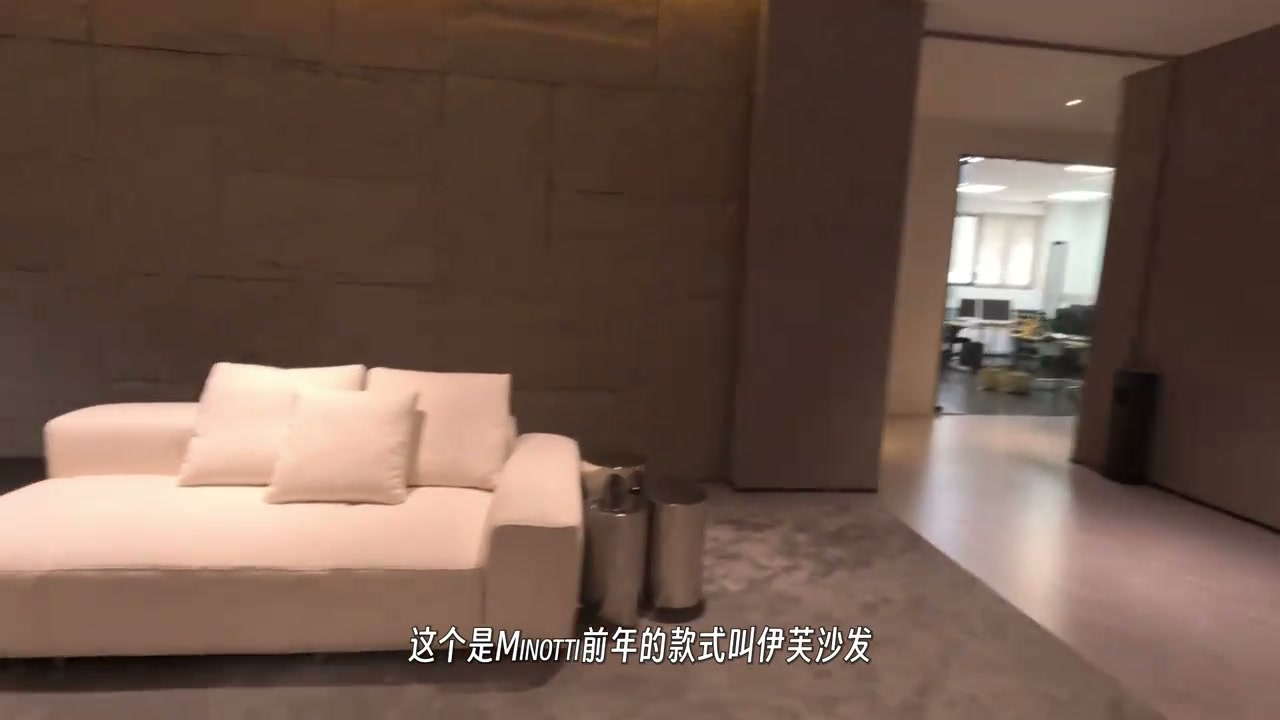 This is a Minotti-style sofa.
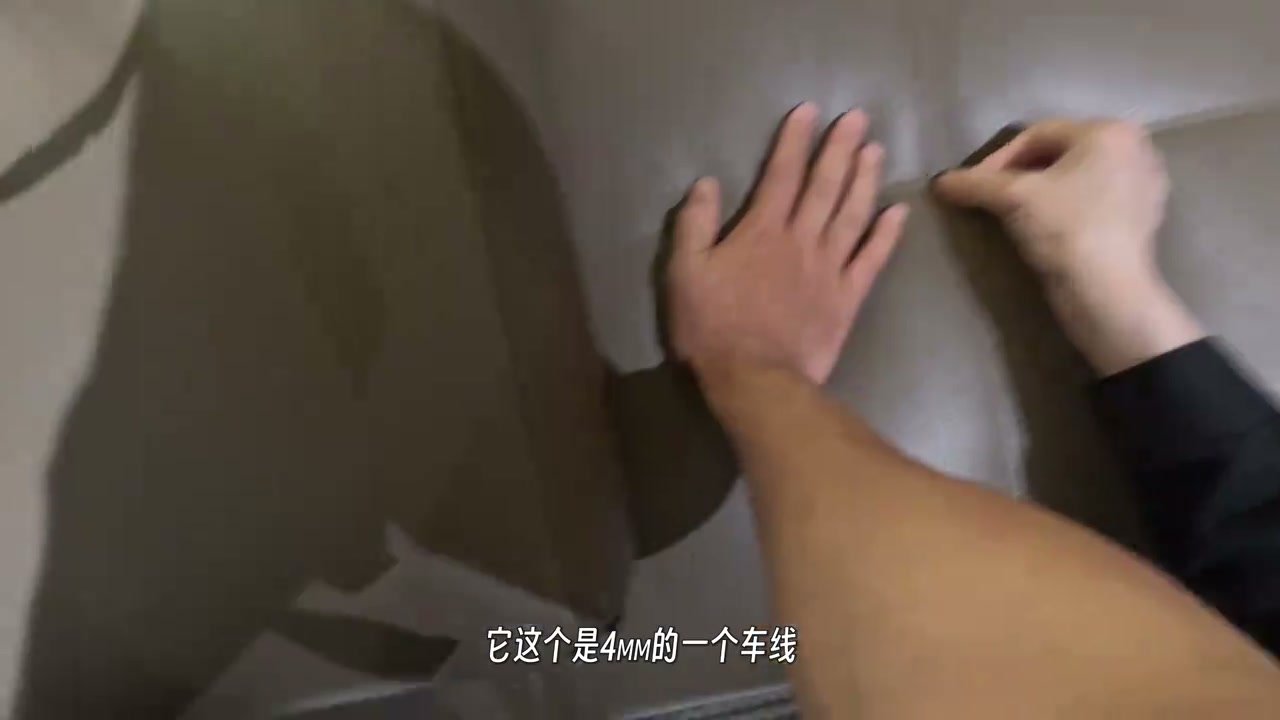 This stitching is about 4 mm apart.
The lesson is more useful than a single verdict on either showroom. A high price, a large display space and a familiar design do not establish build quality. Similar products can differ in leather grade, hidden materials, frame construction, seam finishing and labor. Conversely, a showroom that makes one excellent sofa may sell weaker pieces elsewhere in its range. Compare the exact item you plan to buy, not only the showroom’s reputation. Video 14:40–15:45
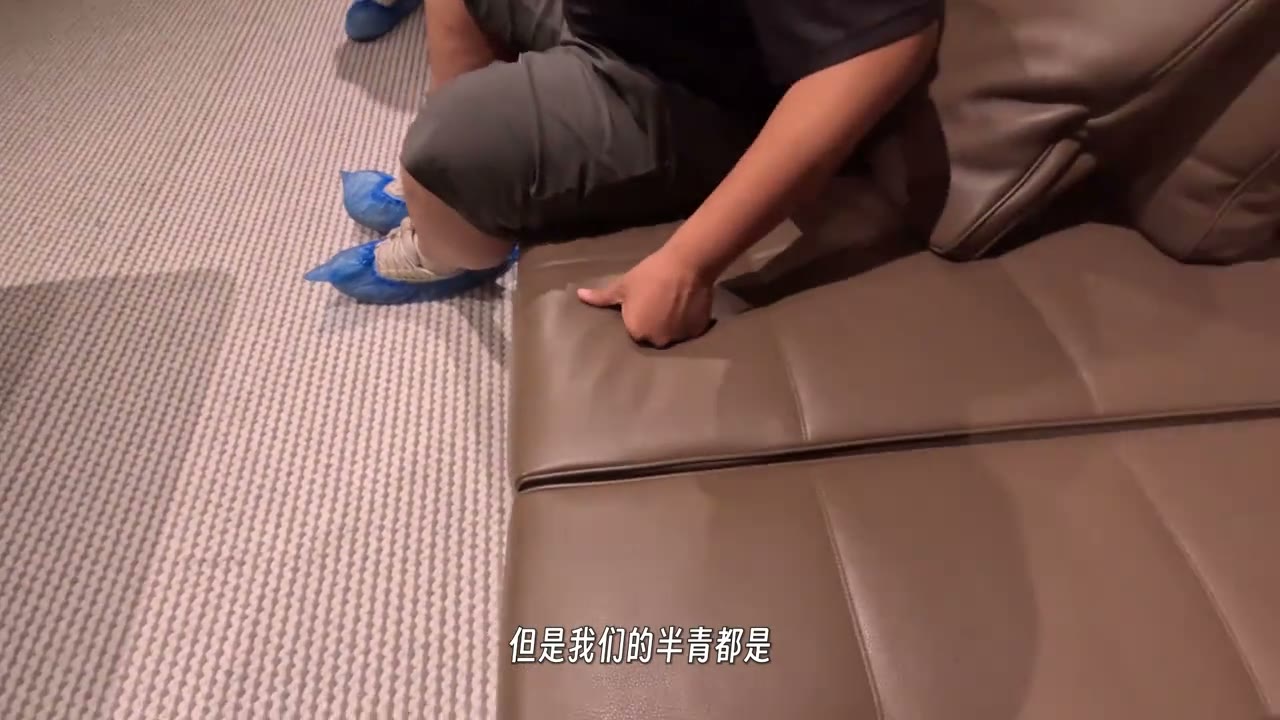 The guide presses the sofa’s leather and checks its edge.
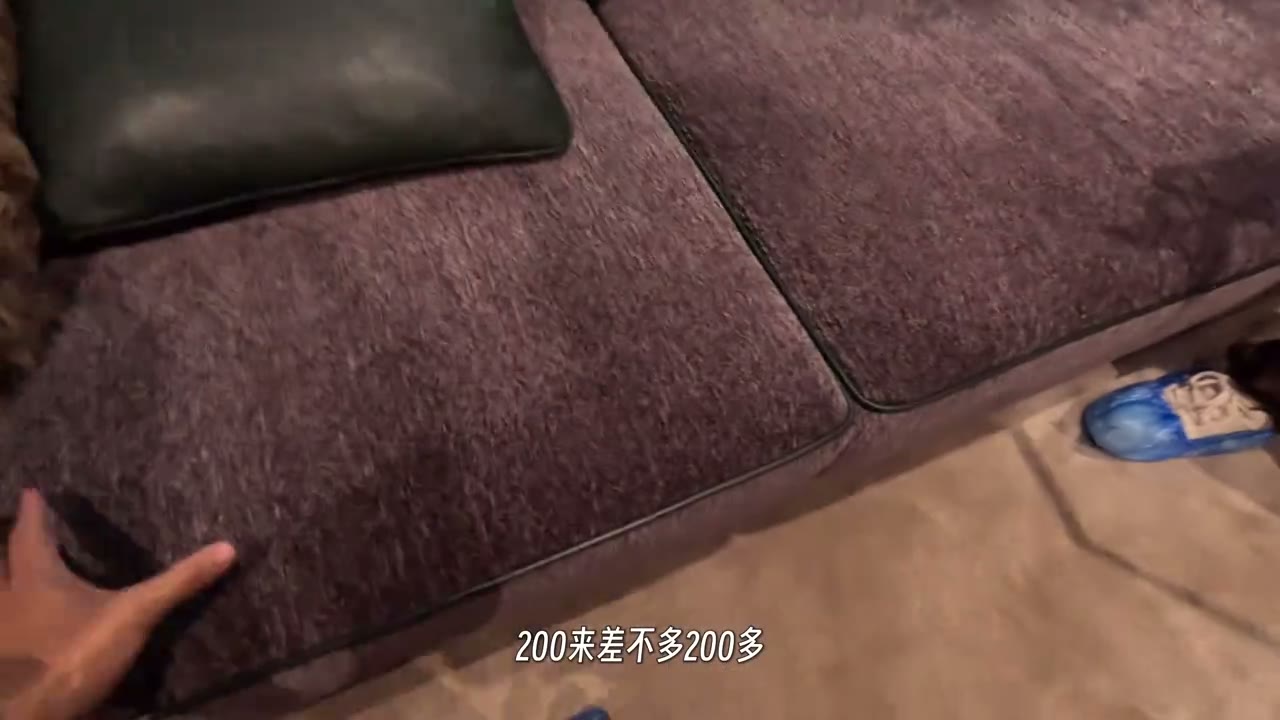 Two upholstery panels meet at a visible seam.
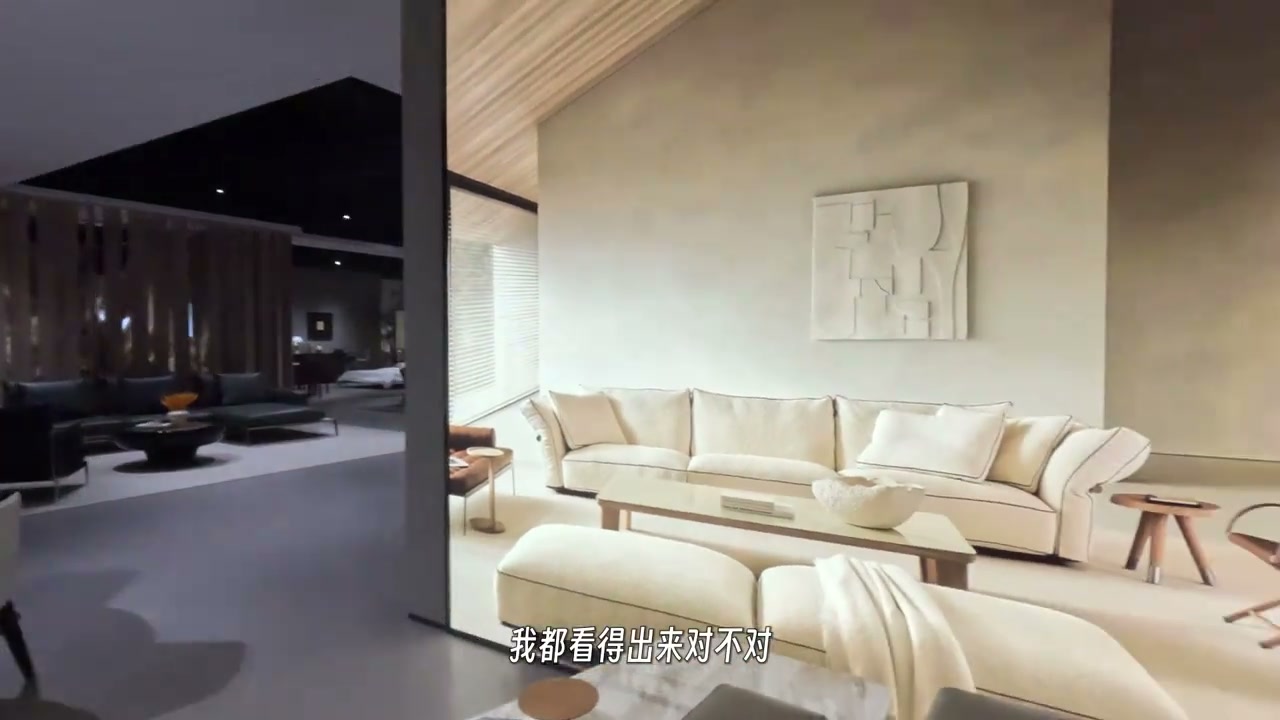 Even I can see the difference—right?
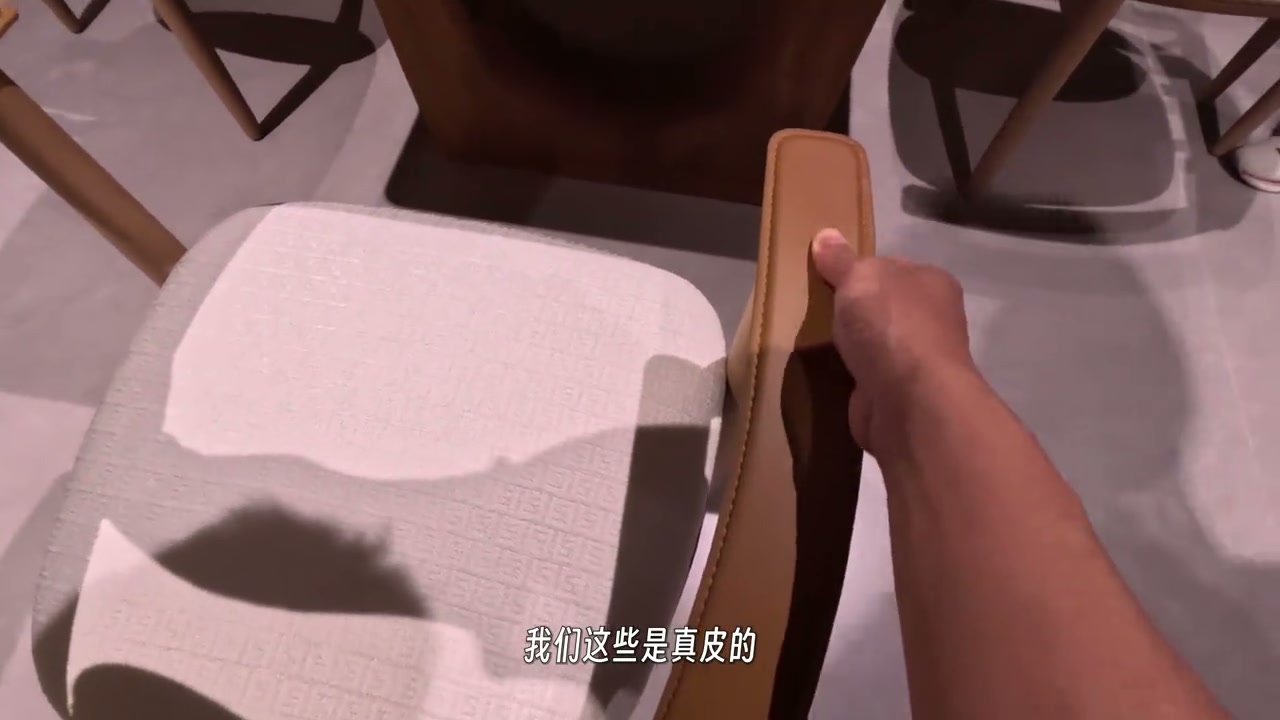 These chairs use genuine leather.
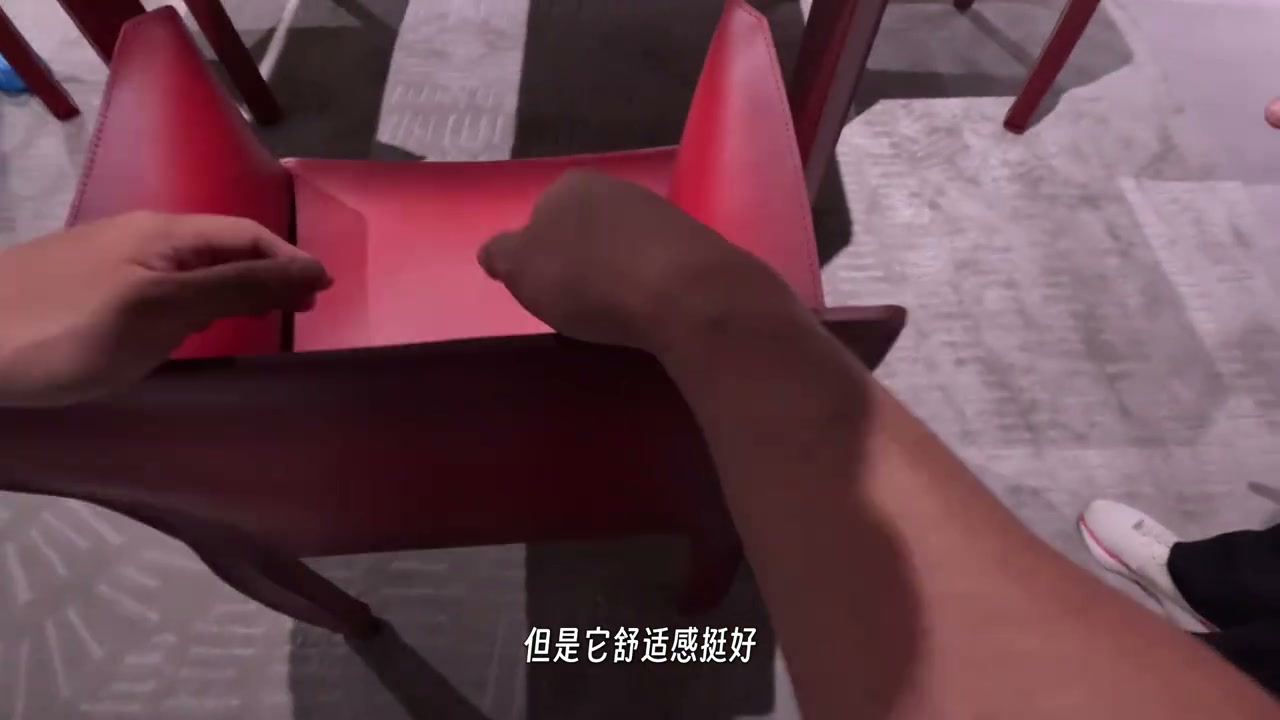 But it feels quite comfortable.
 Its shape is not as good.
The interviewed buyer admits that he sometimes shows a weaker option before a stronger one so the difference is easier to see. This can educate a customer, but it can also anchor their judgment. Ask why each stop was selected, and request at least one comparable product outside that curated sequence. Video 15:45–16:00
A customer does not need to become a furniture engineer overnight. They do need enough product vocabulary to ask questions that force a specific answer.
Where a guided tour can go wrong
The film describes an “A/B goods” risk: a customer inspects and approves a high-quality sample at one showroom, but a superficially similar, lower-grade version is later supplied by another source. The speakers present this as a known industry tactic, not as something they prove happened during their visit. Their immediate safeguard is to contract with the supplier whose product was approved. That is a useful start, but a factory name alone is not enough. The order should identify the actual model, dimensions, materials, leather or fabric grade, finish, color, hardware, approved sample photos, packaging, delivery terms and remedy for substitution. Video 08:49–09:17 See also what to sign off before production.
They also discuss buyers with exclusive access to particular showrooms. The host worries that exclusivity can reduce price comparison: when multiple buyers can sell the same supplier’s products, competing quotes may expose the going price. An exclusive relationship is not proof of abuse, but it makes written specifications and independent quotes more valuable. The host suggests some guides may prefer suppliers with larger rebates. Again, that is an incentive to investigate, not a verdict on every buyer. Video 09:17–11:10
The host’s complaint about a first showroom’s no-filming rule is less conclusive than the video sometimes implies. A filming restriction can arise for several reasons and does not by itself prove poor quality or inflated prices. The stronger evidence is what the customer can inspect, compare and put on the contract. Video 10:17–10:50
“Factory direct” is a claim, not a price guarantee
The interviewee explains why a one-off consumer should not assume they can obtain the same rate as a dealer. Factories may rely on trade customers and avoid undercutting their own channels; some also operate consumer-facing brands at consistent public prices. In his account, the phrase “source factory” is often used as a marketing hook. A genuinely direct purchase may still include showroom costs, sales costs, logistics and profit. The host suggests that a factory specializing in one product category can sometimes offer better value than a showroom assembling many suppliers’ goods. That is a sourcing hypothesis to test item by item, not a guarantee. Video 06:40–07:35, 16:00–16:25
The film also visits a furniture-market area where street solicitors approach their car. The host describes the encounter as intimidating and distinguishes that style of customer capture from the scheduled showroom tour he has just taken. The buyer says the two services seek different customers. The scene illustrates why a visitor may value a planned route, but one episode cannot establish how an entire district operates. The speakers say online discovery has made Foshan’s market more transparent than the era when prices were rarely displayed and outsiders were easier to overcharge. Video 16:30–18:15


A practical test for any buyer
At the end, the host concludes that the best furniture buyers do technical work. They have visited factories, studied products and can explain a quality difference in concrete terms. He recommends comparing several buyers for both competence and honesty. He also sketches a tradeoff: strong service costs money; a highly visible buyer has marketing costs; an unusually low price may leave less room for hands-on care. His “triangle” is a way to ask questions, not a law of the market. Video 18:43–20:24
A competent buyer can be worth paying. The film gives credible examples of time saved and defects spotted, but it also shows why a pleasant tour is not the same as an independent recommendation. Choose a buyer who can make their reasoning, incentives and order terms visible. That is a more reliable test than a “factory direct” slogan or a promise of free service. To distinguish the parties behind the quote, use the factory, trader and sourcing-agent role map.
Frequently asked questions
How do Foshan furniture buyers get paid?
Payment models vary. The buyer filmed here says he charges roughly RMB 300 if a tour produces no order and receives payment from the supplier after a sale. The video also discusses supplier commissions of 20–30% for some relationships. These are the speakers’ figures, not a verified market rate; ask for the terms on your own order in writing.
Is paying a Foshan furniture buyer worth it?
It can be if the buyer finds relevant suppliers, compares like-for-like products, explains visible and hidden construction, and makes the order easier to inspect and enforce. Judge the value against the full delivered cost and the work promised, not the tour fee alone.
Is buying direct from a Foshan furniture factory always cheaper?
No. A one-off buyer may not receive a dealer’s price, and a direct quote can still exclude freight, packing, inspection and after-sales work. Compare written quotes for the same dimensions, materials and delivery scope.
What should be written into the furniture order?
Identify the invoicing supplier, model, dimensions, materials and grades, finish, approved sample photos, price and commission disclosures, packaging, freight, delivery point, inspection method and remedy if the supplied goods differ.
Next stepWorking through this for a real order? Send the item list and the destination.